Success Stories
August 24, 2026
208 views
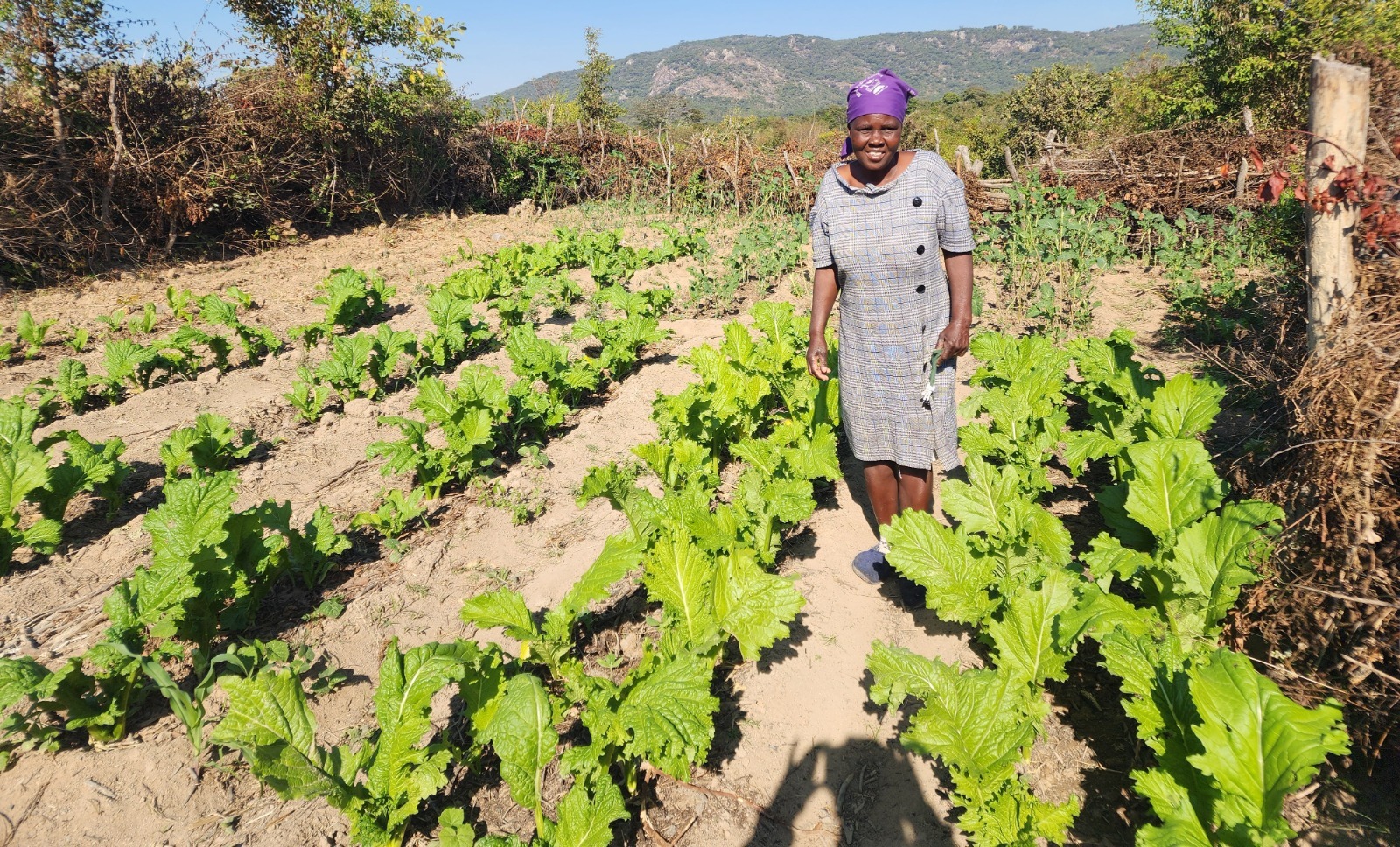
The Ireland’s Civil Society Partnership (ICSP) project recognises that gender-based violence (GBV) is driven not only by harmful social norms but also by women's economic dependence. To address these interconnected challenges, the project combines the SASA! Faith methodology with women's economic empowerment initiatives.
As part of this integrated approach, the Union for the Development of Apostolic Churches in Zimbabwe, Africa (UDACIZA), in partnership with Fambidzanai Permaculture Centre, Caritas Masvingo and Musasa, introduced agroecology training to strengthen sustainable livelihoods while promoting gender equality and reducing GBV in Bikita District.
Before participating in the project, Ranganai Munyonga, a Community Activist (CA) under the SASA! Faith programme from Ward 13, relied mainly on seasonal farming, which was increasingly affected by erratic rainfall and rising production costs. Like many women in her community, limited financial resources and dependence on purchased agricultural inputs constrained her ability to increase household income.
Although she actively promoted gender equality through SASA! Faith community dialogues, she recognised that many women remained economically dependent on their spouses, limiting their participation in household decision-making and increasing their vulnerability to GBV. Food insecurity during prolonged dry spells further intensified financial pressure on families, often contributing to household conflict.
In March 2026, Ranganai participated in an agroecology training alongside other Community Activists from Ward 13. The training, facilitated by Fambidzanai Permaculture Centre and Caritas Masvingo, equipped participants with practical skills in soil testing, compost making, liquid manure preparation, botanical pest and disease management, water harvesting, contour pegging and other agroecological farming practices that use locally available resources instead of expensive commercial inputs.
Following the training, Ranganai immediately cascaded the knowledge to other women in her ward through demonstrations and community learning sessions. Together, they began establishing agroecological vegetable gardens using the skills they had acquired.
One of the women she mentored, Rhoda Matemera, constructed an infiltration pit and introduced a water harvesting system that enabled her to maintain vegetable production beyond the rainy season. Rhoda also began producing organic compost and liquid manure to improve soil fertility at minimal cost.
Through SASA! Faith community dialogues and practical demonstrations, Ranganai continued encouraging more women to adopt sustainable farming practices that improve food security, household resilience and economic independence.
The training transformed the livelihoods and confidence of many women practising agroecology. One participant shared that her vegetable garden now provides nutritious vegetables for household consumption, improving her family's diet while reducing food expenditure.
The sale of surplus produce has created a reliable source of income that helps meet household needs, including school expenses and other essential costs. The increased income has also strengthened women's position within their households.
By contributing financially to their families' wellbeing, many women have gained greater confidence and now participate more actively in household decision-making. As one participant explained, “Ikozvino baba vanotondibvunza kuti todii kwandiri havachangoiti zvavada ivo vega.”
This illustrates how women's economic empowerment can positively influence household power dynamics, resulting in greater respect, shared decision-making and more equitable relationships.
The experiences of women practising agroecology reflect broader changes taking place across Ward 13. Trained Community Activists continue to establish agroecological gardens while cascading knowledge to other women through practical demonstrations and community dialogues.
As a result, more households are adopting affordable farming practices such as compost making, water harvesting and natural pest management, leading to improved food production, lower farming costs and increased resilience to climate change.
Community discussions under the SASA! Faith programme also demonstrate a growing understanding that preventing GBV requires both challenging harmful social norms and strengthening women's economic independence.
More women are actively participating in livelihood activities, while men are becoming increasingly supportive of shared decision-making and women's economic contributions. These changes are helping to reduce financial stress within households, strengthen family cooperation and create healthier, more respectful relationships.
Despite this encouraging progress, challenges remain. Climate change continues to affect agricultural production through erratic rainfall and prolonged dry spells, highlighting the need for continued investment in water harvesting and agroecological farming practices.
Some households still have limited resources to expand agroecological activities, while deeply rooted gender norms continue to restrict women's participation in decision-making in some families. Sustained mentoring and continued engagement with both women and men will therefore be essential to consolidate these gains.
Looking ahead, Ranganai hopes to expand her agroecological garden, increase household income and continue mentoring other women to adopt sustainable farming practices. She believes that economic empowerment enables women to participate confidently in household and community decision-making while reducing their vulnerability to GBV.
Through the continued integration of agroecology and the SASA! Faith methodology, the project aims to reach more households with practical livelihood skills that strengthen resilience, improve food security and promote more gender-equitable and violence-free communities.
As part of this integrated approach, the Union for the Development of Apostolic Churches in Zimbabwe, Africa (UDACIZA), in partnership with Fambidzanai Permaculture Centre, Caritas Masvingo and Musasa, introduced agroecology training to strengthen sustainable livelihoods while promoting gender equality and reducing GBV in Bikita District.
Before participating in the project, Ranganai Munyonga, a Community Activist (CA) under the SASA! Faith programme from Ward 13, relied mainly on seasonal farming, which was increasingly affected by erratic rainfall and rising production costs. Like many women in her community, limited financial resources and dependence on purchased agricultural inputs constrained her ability to increase household income.
Although she actively promoted gender equality through SASA! Faith community dialogues, she recognised that many women remained economically dependent on their spouses, limiting their participation in household decision-making and increasing their vulnerability to GBV. Food insecurity during prolonged dry spells further intensified financial pressure on families, often contributing to household conflict.
In March 2026, Ranganai participated in an agroecology training alongside other Community Activists from Ward 13. The training, facilitated by Fambidzanai Permaculture Centre and Caritas Masvingo, equipped participants with practical skills in soil testing, compost making, liquid manure preparation, botanical pest and disease management, water harvesting, contour pegging and other agroecological farming practices that use locally available resources instead of expensive commercial inputs.
Following the training, Ranganai immediately cascaded the knowledge to other women in her ward through demonstrations and community learning sessions. Together, they began establishing agroecological vegetable gardens using the skills they had acquired.
One of the women she mentored, Rhoda Matemera, constructed an infiltration pit and introduced a water harvesting system that enabled her to maintain vegetable production beyond the rainy season. Rhoda also began producing organic compost and liquid manure to improve soil fertility at minimal cost.
Through SASA! Faith community dialogues and practical demonstrations, Ranganai continued encouraging more women to adopt sustainable farming practices that improve food security, household resilience and economic independence.
The training transformed the livelihoods and confidence of many women practising agroecology. One participant shared that her vegetable garden now provides nutritious vegetables for household consumption, improving her family's diet while reducing food expenditure.
The sale of surplus produce has created a reliable source of income that helps meet household needs, including school expenses and other essential costs. The increased income has also strengthened women's position within their households.
By contributing financially to their families' wellbeing, many women have gained greater confidence and now participate more actively in household decision-making. As one participant explained, “Ikozvino baba vanotondibvunza kuti todii kwandiri havachangoiti zvavada ivo vega.”
This illustrates how women's economic empowerment can positively influence household power dynamics, resulting in greater respect, shared decision-making and more equitable relationships.
The experiences of women practising agroecology reflect broader changes taking place across Ward 13. Trained Community Activists continue to establish agroecological gardens while cascading knowledge to other women through practical demonstrations and community dialogues.
As a result, more households are adopting affordable farming practices such as compost making, water harvesting and natural pest management, leading to improved food production, lower farming costs and increased resilience to climate change.
Community discussions under the SASA! Faith programme also demonstrate a growing understanding that preventing GBV requires both challenging harmful social norms and strengthening women's economic independence.
More women are actively participating in livelihood activities, while men are becoming increasingly supportive of shared decision-making and women's economic contributions. These changes are helping to reduce financial stress within households, strengthen family cooperation and create healthier, more respectful relationships.
Despite this encouraging progress, challenges remain. Climate change continues to affect agricultural production through erratic rainfall and prolonged dry spells, highlighting the need for continued investment in water harvesting and agroecological farming practices.
Some households still have limited resources to expand agroecological activities, while deeply rooted gender norms continue to restrict women's participation in decision-making in some families. Sustained mentoring and continued engagement with both women and men will therefore be essential to consolidate these gains.
Looking ahead, Ranganai hopes to expand her agroecological garden, increase household income and continue mentoring other women to adopt sustainable farming practices. She believes that economic empowerment enables women to participate confidently in household and community decision-making while reducing their vulnerability to GBV.
Through the continued integration of agroecology and the SASA! Faith methodology, the project aims to reach more households with practical livelihood skills that strengthen resilience, improve food security and promote more gender-equitable and violence-free communities.
Tags:
Agroecology
Women’s Economic Empowerment
GBV Prevention
Related Posts
Defying Apostolic Church Doctrines
August 24, 2026
SASA! Faith and Women’s Leadership
May 1, 2026
UDACIZA Statement on the 2025/6 Rain Season in Zimbabwe
April 15, 2026