Success Stories
August 24, 2026
169 views
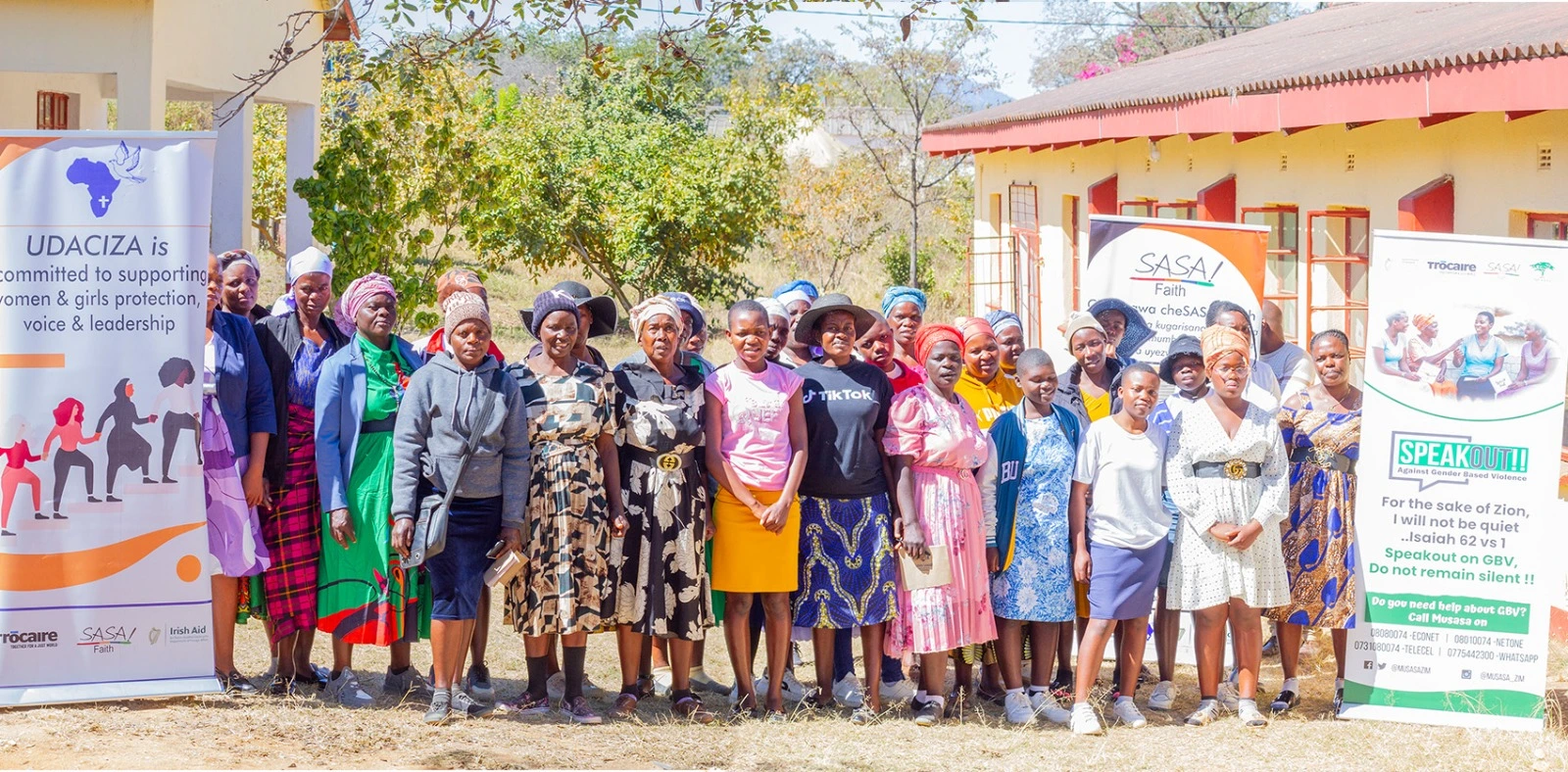
One of the most significant changes during the first half of 2026 was the establishment of gender desks in ten of the twenty-four faith communities where the SASA! Faith project is being implemented across four wards of Bikita District. These include six Apostolic/Zionist-related churches, three Roman Catholic churches and one Reformed Church in Zimbabwe (RCZ).
The gender desks have reinforced safeguarding in faith communities by providing trusted and accessible support structures for survivors of gender-based violence (GBV). Before the SASA! Faith project, many faith communities did not have clear safeguarding, reporting or referral structures. Survivors, especially women, would ordinarily report cases to Religious Leaders (RLs) or church leadership, which was and remains mostly dominated by men.
Results from Focus Group Discussions (FGDs) conducted in August 2025 and the Rapid Assessment Survey (RAS) conducted in November 2025 showed that most women knew only the RL as the person to report GBV cases to within a faith community. However, because of the sensitive nature of some forms of violence, particularly sexual violence, many chose to remain silent.
One female congregant from Zion Church of God in Ward 21 shared: “Ndatofara tavawo nemadzimai anoonawo nezvekumbunyikidzwa kwedu obva atimiririra kuti tiwane ruenzaniso tiri muchechi. Zvaisava nyore kuudza mufundisi wechirume nyaya dzakafanana nedzebonde, vazhinji vedu taingodzinyarara tichitya kunzi waakukumbira bonde kuvakuru vechechi.”
The idea of establishing gender desks developed after Community Activists (CAs) reflected on the RAS findings during practice sessions and later engaged their RLs, with support from project staff, during the RLs’ quarterly meetings.
The gender desks were introduced as an additional safeguarding structure within faith spaces, rather than replacing RLs. Although some faith spaces were initially concerned about potential overlapping roles between RLs and gender desks, continuous discussions on safeguarding, accountability and survivor protection helped church leaders appreciate the need for multiple trusted reporting points.
The first gender desk was established in April 2026, with the remaining desks formed between May and June 2026. Each gender desk consists of one adult woman, one adult man, one female youth and one male youth. Members were selected by church members based on their integrity, confidentiality, empathy, gender sensitivity and knowledge of referral pathways.
This also marked the first time young people and youth were formally represented in church safeguarding structures. One RL from Kuratidzwa KwaJohane Apostolic Church shared that although the church had a gender committee before, it was rarely used. Following engagement with a CA, the committee was revived and expanded to include two youth representatives.
The gender desks now provide safe spaces for survivors to report violence, receive first-aid counselling and be referred to services such as the Victim Friendly Unit (VFU), Department of Social Development (DSD), Ministry of Women Affairs, Community, Small and Medium Enterprises Development (MWACSMED), Musasa, Zimbabwe Women Lawyers Association (ZWLA) and health facilities.
The desks meet monthly, keep records of cases and referrals, and facilitated 12 referrals between April and June 2026. The change has also reduced pressure on RLs while increasing survivors’ confidence and comfort in seeking help.
One Roman Catholic RL from Ward 19 explained: “Chokwadi dzimwe nguva vanhu vanotya kuman'ara kumutungamiriri asi kwekuman'ara kukawanda zvinorerutsirawo vaPriest uye vanhu vanosungunuka.”
Young people have also embraced the initiative. One female youth Gender Desk member from the Reformed Church in Zimbabwe in Ward 32 said: “Ndinotoona kukosha kwevakadzi nevarume zvakafanana nekuti neni semusikana ndiripo pakumiririra kodzero dzevanasikana kuti vasambunyikidzwa.”
The success of establishing gender desks has created demand for further learning within faith spaces. Five faith spaces requested additional training on safeguarding and consent within marriage, while two churches requested sessions for young people on drug and substance abuse, sexual abuse prevention, teenage pregnancy, child marriages and reporting mechanisms.
While gender desk members serve voluntarily, they continue to strengthen safeguarding within their churches. Three additional faith spaces are now in the process of establishing gender desks, while the remaining faith spaces continue to use their existing gender-sensitive structures.
This demonstrates growing ownership of safeguarding within faith communities and a shared commitment to ensuring that survivors have safe, trusted and accessible support systems.
The gender desks have reinforced safeguarding in faith communities by providing trusted and accessible support structures for survivors of gender-based violence (GBV). Before the SASA! Faith project, many faith communities did not have clear safeguarding, reporting or referral structures. Survivors, especially women, would ordinarily report cases to Religious Leaders (RLs) or church leadership, which was and remains mostly dominated by men.
Results from Focus Group Discussions (FGDs) conducted in August 2025 and the Rapid Assessment Survey (RAS) conducted in November 2025 showed that most women knew only the RL as the person to report GBV cases to within a faith community. However, because of the sensitive nature of some forms of violence, particularly sexual violence, many chose to remain silent.
One female congregant from Zion Church of God in Ward 21 shared: “Ndatofara tavawo nemadzimai anoonawo nezvekumbunyikidzwa kwedu obva atimiririra kuti tiwane ruenzaniso tiri muchechi. Zvaisava nyore kuudza mufundisi wechirume nyaya dzakafanana nedzebonde, vazhinji vedu taingodzinyarara tichitya kunzi waakukumbira bonde kuvakuru vechechi.”
The idea of establishing gender desks developed after Community Activists (CAs) reflected on the RAS findings during practice sessions and later engaged their RLs, with support from project staff, during the RLs’ quarterly meetings.
The gender desks were introduced as an additional safeguarding structure within faith spaces, rather than replacing RLs. Although some faith spaces were initially concerned about potential overlapping roles between RLs and gender desks, continuous discussions on safeguarding, accountability and survivor protection helped church leaders appreciate the need for multiple trusted reporting points.
The first gender desk was established in April 2026, with the remaining desks formed between May and June 2026. Each gender desk consists of one adult woman, one adult man, one female youth and one male youth. Members were selected by church members based on their integrity, confidentiality, empathy, gender sensitivity and knowledge of referral pathways.
This also marked the first time young people and youth were formally represented in church safeguarding structures. One RL from Kuratidzwa KwaJohane Apostolic Church shared that although the church had a gender committee before, it was rarely used. Following engagement with a CA, the committee was revived and expanded to include two youth representatives.
The gender desks now provide safe spaces for survivors to report violence, receive first-aid counselling and be referred to services such as the Victim Friendly Unit (VFU), Department of Social Development (DSD), Ministry of Women Affairs, Community, Small and Medium Enterprises Development (MWACSMED), Musasa, Zimbabwe Women Lawyers Association (ZWLA) and health facilities.
The desks meet monthly, keep records of cases and referrals, and facilitated 12 referrals between April and June 2026. The change has also reduced pressure on RLs while increasing survivors’ confidence and comfort in seeking help.
One Roman Catholic RL from Ward 19 explained: “Chokwadi dzimwe nguva vanhu vanotya kuman'ara kumutungamiriri asi kwekuman'ara kukawanda zvinorerutsirawo vaPriest uye vanhu vanosungunuka.”
Young people have also embraced the initiative. One female youth Gender Desk member from the Reformed Church in Zimbabwe in Ward 32 said: “Ndinotoona kukosha kwevakadzi nevarume zvakafanana nekuti neni semusikana ndiripo pakumiririra kodzero dzevanasikana kuti vasambunyikidzwa.”
The success of establishing gender desks has created demand for further learning within faith spaces. Five faith spaces requested additional training on safeguarding and consent within marriage, while two churches requested sessions for young people on drug and substance abuse, sexual abuse prevention, teenage pregnancy, child marriages and reporting mechanisms.
While gender desk members serve voluntarily, they continue to strengthen safeguarding within their churches. Three additional faith spaces are now in the process of establishing gender desks, while the remaining faith spaces continue to use their existing gender-sensitive structures.
This demonstrates growing ownership of safeguarding within faith communities and a shared commitment to ensuring that survivors have safe, trusted and accessible support systems.
Tags:
GBV Support
Women’s Empowerment
Faith Communities
Related Posts
Defying Apostolic Church Doctrines
August 24, 2026
SASA! Faith and Women’s Leadership
May 1, 2026